 346 262 6075
 info@firedos.com


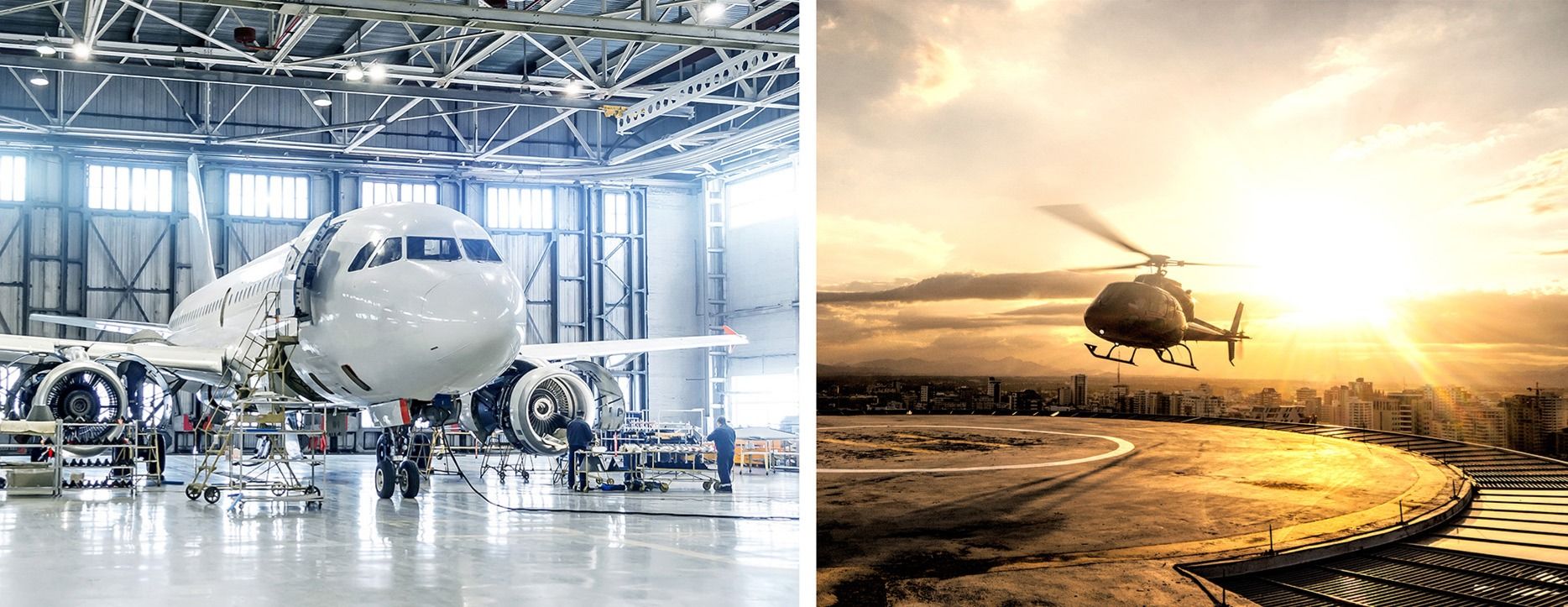
Reliable fire safety during take-off and landing, as well as maintenance and repairs
Fire risk kerosene
Fire protection in aviation: Aircraft hangars and helipads
In both aircraft hangars and on helipads, spilled jet fuel, when in contact with hot surfaces such as engines, brakes and hydraulic components, poses a significant fire risk.
When aircraft are parked in a hangar for maintenance, repair, or storage, they are not usually fueled up. However, a certain amount of fuel can remain. As a result, maintenance and repair works increase the fire risk due to potential ignition sources. Along with this, the size and height of the hangar present some special requirements for the fire protection concept. Hangars must be constructed according to the guidelines of fire class HH (high hazard) and according to the design standards NFPA 409 and BS 13565-2 regarding to the respective gate and aircraft type.
When taking off and landing at helipads (also known as heliports or helidecks), there is a risk – in addition to accidents in general – that kerosene may leak and ignite on the engine or as a result of flying sparks. This is compounded by strong rotor downwash, which can further fan the flames. Particularly on rooftop helipads and offshore helidecks, space is limited, which requires compact fire safety solutions. Helipads must be constructed in accordance with the NFPA 418 design standard. Helidecks are subject to international safety standards such as CAP 437 and ICAO, as well as national regulations such as SOLF.

Goods to be protected:
- Flammable liquids in aircraft and helicopters, e.g., fuel
Requirements to firefighting technology
Hangars
Firefighting foam is a critical element in hangar firefighting, where high-expansion foam generators are commonly used as part of a fire protection system. They are mounted at ceiling height and supplied by a foam proportioner. In the event of a fire, the hangar must be foamed up within 3 minutes, up to a height for doors and walls of 1.5 meters.
Fires may break out in various places in the hangar. However, the biggest potential ignition source is below the aircraft’s wings as leaking fuel may gather there. This is why the extinguishing technology planning must consider all options while the area under the wings must be specially protected. This is often mandated by law for a wing size of more than 280 sqm. Thus, in the event of a fire, the extinguishing foam is discharged with pinpoint accuracy instead of covering the entire surface, which significantly reduces cleaning costs after such an extinguishing operation.
Infrared early fire detection systems
An early fire detection system allows early localization of the fire source. Continuous heat detection helps determine whether the fire has been successfully extinguished or if further action must be taken.
Remote-controlled firefighting monitors for pinpointed extinguishing
Remote-controlled fire monitors, which are integrated into the early fire detection system, enable targeted fire suppression within a limited area for a defined duration – namely, only until the fire hazard has been eliminated. FireDos’ compact fire monitors feature an innovative, flow-optimised ‘Oval-Flat’ design, which results in minimal pressure loss and maximises the spray range. To protect the area beneath the aircraft wing, a combination of oscillating and remote-controlled fire monitors is recommended, installed at a height of 2 to 4 metres on walls or columns. The most suitable fire monitors are those with a flow rate of 660 to 1321 gpm, fitted with a foam nozzle and, optionally, a deflector to create a foam blanket beneath the engines. During a fire-fighting operation, care must be taken to ensure that the jet of extinguishing agent does not strike the engines. Wings, engines and other aircraft components can cast shadows over the extinguishing agent jet. This shading must be taken into account when planning the system. The positioning and mounting height of the fire monitors are therefore tailored to the specific aircraft type, the hangar geometry and the intended parking positions.
FireDos fire monitors can be controlled from a safe position and integrated into the operational procedures of the airport or industrial fire service. Depending on the fire safety plan, either a wired control system or a radio remote control can be used. The fire service’s access routes and operational pathways should be taken into account during the planning stage of the system. This ensures that the monitors remain controllable even if certain access areas can no longer be used safely in the event of a fire.
Reliable foam proportioners to supply the high-expansion foam generators and monitors
Stationary proportioners reliably supply high-expansion foam generators with premix to generate extinguishing foam. The purely mechanical FireDos proportioner is characterized by a constant proportioning rate across a wide range of flow rates and pressure of the extinguishing water, guaranteeing maximum reliability. In addition, it allows testing of the proportioning rate while producing no premix at all – a cost-saving and eco-friendly solution.
Helipads
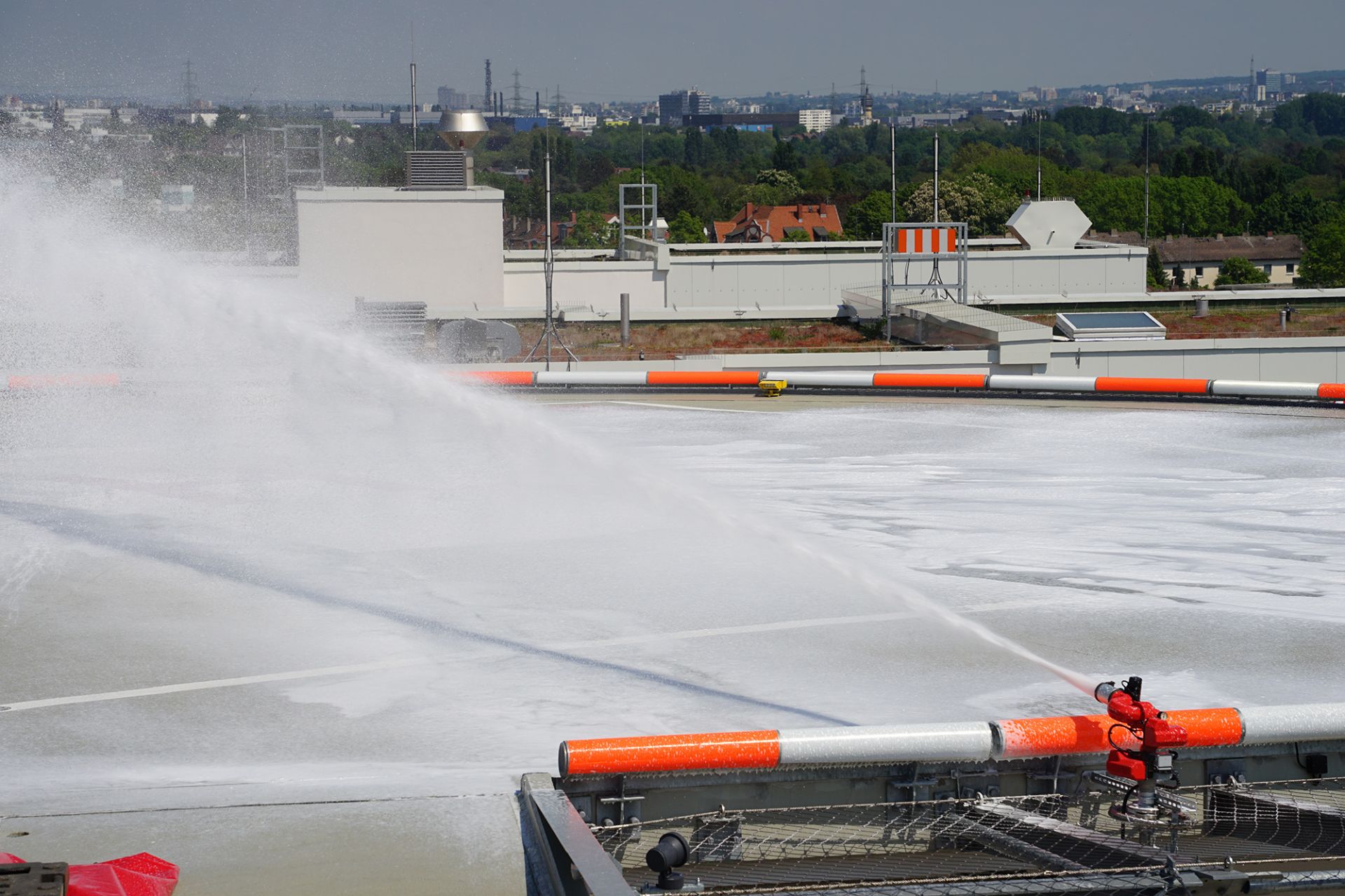
When it comes to fire safety at helipads, extinguishing flammable liquids with fire-fighting foam is also essential. Short response times are crucial to the success of the fire-fighting operation. In addition, containment systems are required to allow kerosene to drain away, thereby preventing the fire from spreading and spreading to buildings. The use of fire-resistant materials and the provision of emergency exits are essential.
Fire monitors for rapid automatic extinguishing
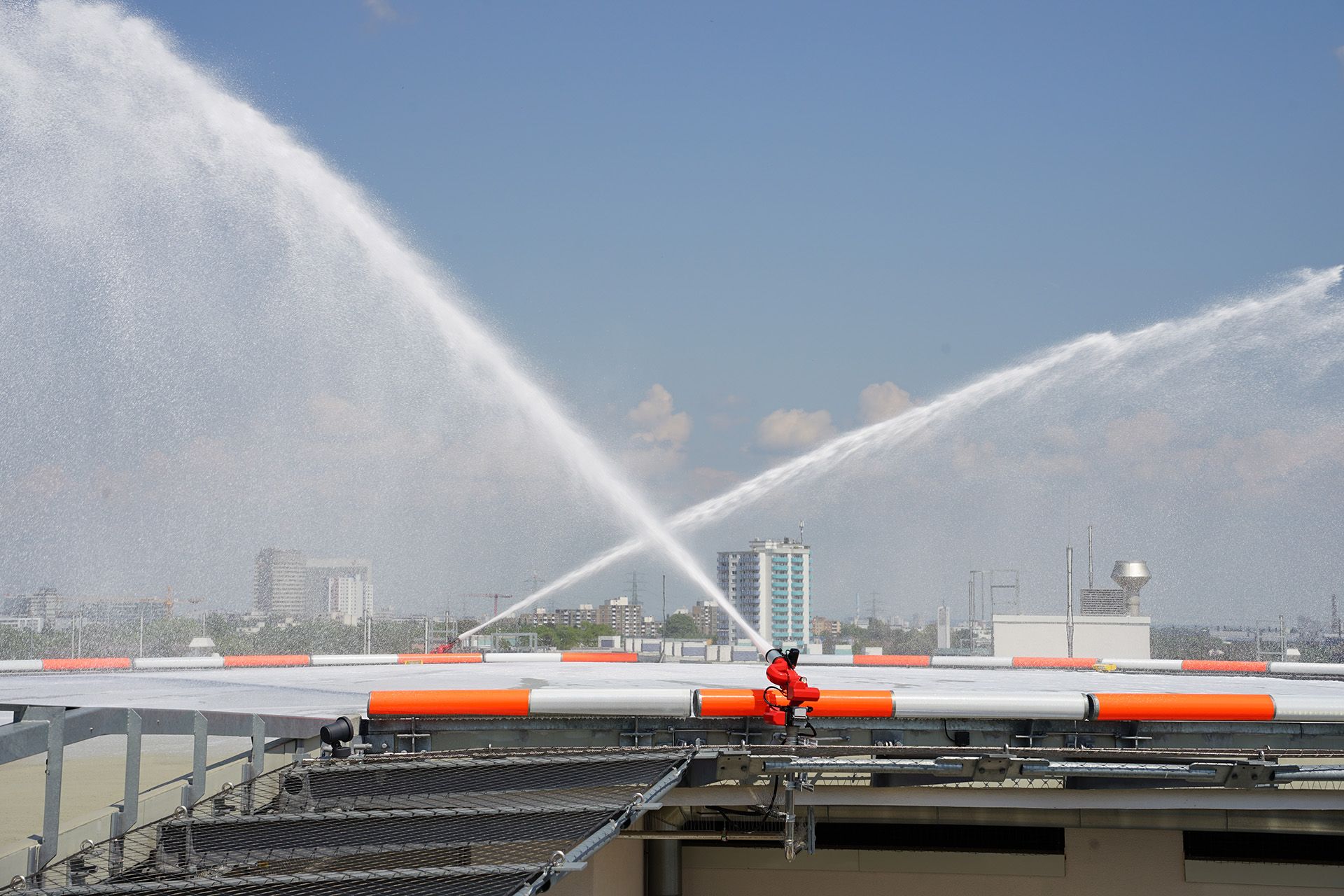
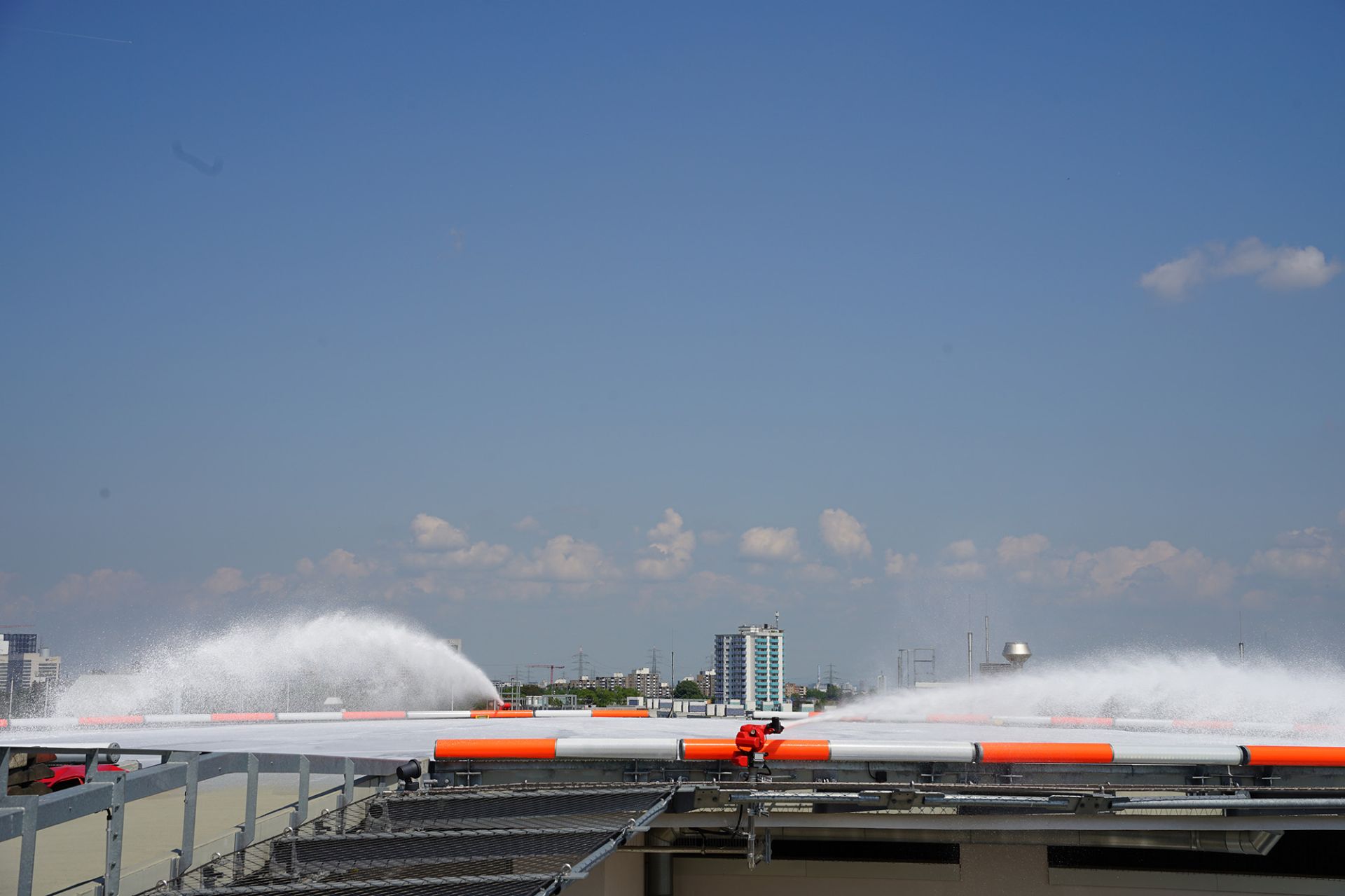
Due to limited space, several small fire monitors with flow rates of 66 to 264 gpm are often installed close to the ground (0 - 0.5 m) on helipads. By positioning the monitors opposite one another or in a coordinated arrangement, shading caused by the helicopter can be reduced. This ensures that the relevant areas can still be reached even when parts of the helicopter block the jet of extinguishing agent from a single monitor.
In addition to the strong rotor downwash, high wind speeds can occur, particularly on rooftop landing pads and offshore helidecks. The wind can affect both the throw distance and the trajectory and distribution of the extinguishing agent. Depending on the conditions, the effective range may be reduced by around 20 to 30 per cent.
A sufficient performance reserve is therefore an essential part of system planning. It is not just the monitor’s nominal flow rate that is decisive. The actual performance is determined by the interplay of the available water volume, inlet pressure, pressure loss, nozzle, jet pattern, throw distance and wind stability.
On helipads and helidecks, short response times are crucial to the success of firefighting operations. FireDos fire monitors can be operated via a PLC control system from a protected observation or technical room. Wired control panels and radio remote controls are also available. This enables operating personnel to control all relevant monitor functions from a safe distance.
When used in conjunction with a suitable multi-purpose nozzle, the spray pattern can be adjusted whilst the system is in operation. This enables operating personnel to respond to changes in the fire and wind conditions.
Foam proportioning systems for extinguishing with foam
Stationary foam proportioning systems are used at helipads. These are often installed on helipads – for example, on hospital roofs – in the helipad’s sub-control centre. The water supply for firefighting is then provided via the fire control centre in the basement. A portable proportioning system can also be used as a backup and mobile unit.


Firefighting monitors
Our monitors can be integrated into automated fire extinguishing systems and operated via remote control.
Stationary foam proportioners
Our stationary foam proportioners are highly reliable, guaranteeing a constant proportioning rate and the delivery of all foam agent types.
Fire risks in hangars and on helipads
-
Maintenance and repair work
Maintenance and repair work in aircraft hangars can present various potential ignition sources which, in combination with aircraft fuels, pose a serious fire risk.
-
Take-off and landing
During take-off and landing, fires can break out on helipads due to leaking kerosene catching fire on hot engine parts or from flying sparks. Further risks include accidents and the strong rotor downwash, which accelerates the spread of the fire.
We are pleased to help
Live Demo
Test our products on-site? Contact us to arrange a LIVE Demo. We look forward to discussing your solution.

FireDos service features
We provide you with comprehensive service – from planning the extinguishing technology solution through commissioning to maintenance. No matter what project phase you are in, we won’t let you down. Our service personnel will be on-site quickly, worldwide.
Typical applications: Hangars and Helipads


Please make sure to consider the following
Hangar:
- Comprehensive fire protection concept with a special focus on the risk area below the aircraft’s wings
- Infrared early fire detection system
- Remote-controlled firefighting monitors for pinpointed extinguishing
- Reliable proportioners to supply the high-expansion foam generator and fire monitor
Helipad:
- Installation of fire monitors for targeted extinguishing with foam
- Drainage systems to divert flammable liquids away from the landing area
- Use of fire-resistant materials in the construction of helicopter landing pads and provision of emergency exits
Explore the virtual world of FireDos!
High-rack warehouse, tank farm or waste incineration plant – explore the virtual world of FireDos and test various product configurations in simulated application settings. Augmented Reality puts our products into your hands – just a click away.
Please note the following for easier navigation:
- Use the number buttons to show the individual camera positions.
- Use the buttons 'q' and 'e' to navigate up and down..
We look forward to meeting you in our virtual world!

This might also be of interest for you:
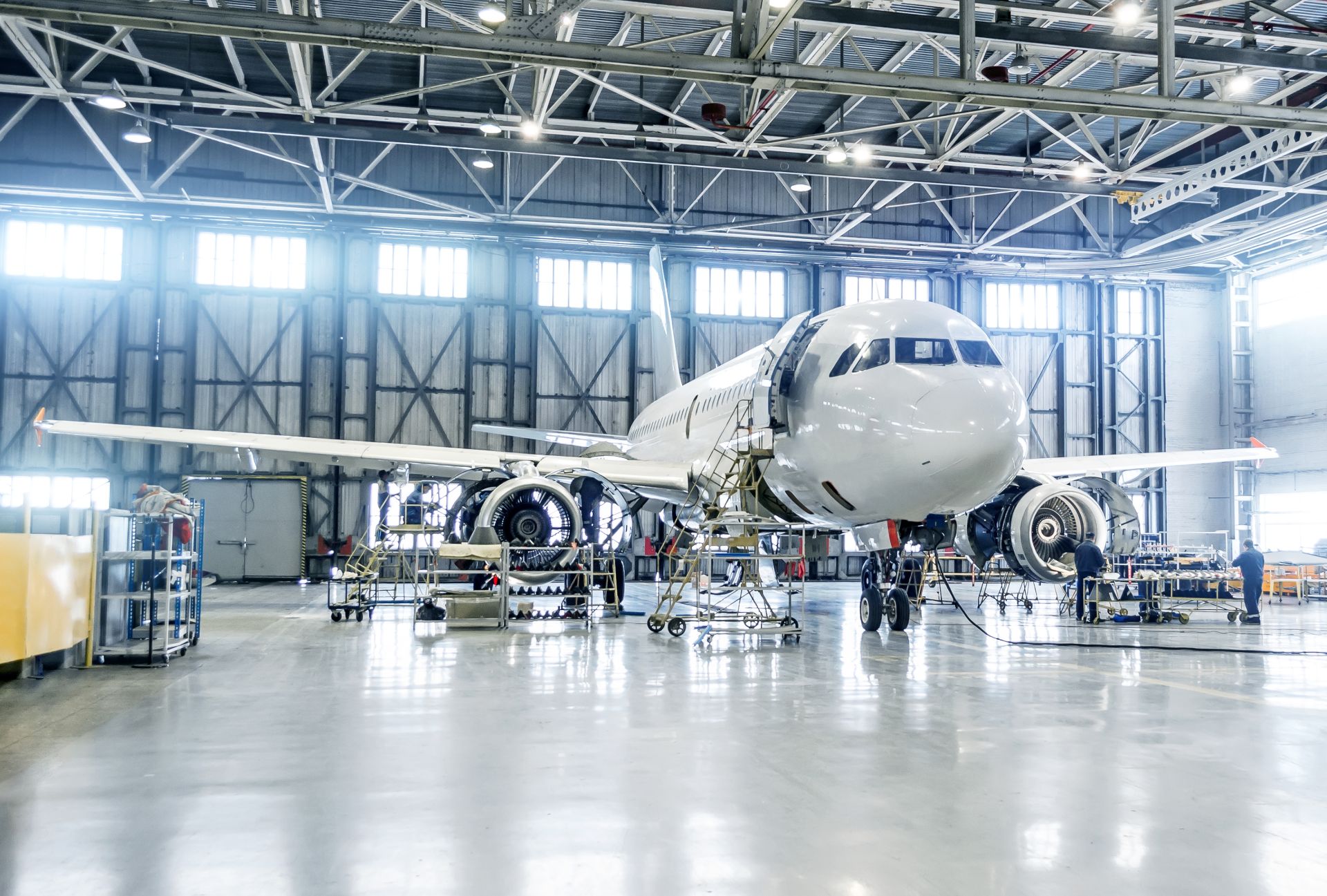
Webinar 'Monitors in the aircraft sector'
Learn more about the requirements for fire-extinguishing technology.
View more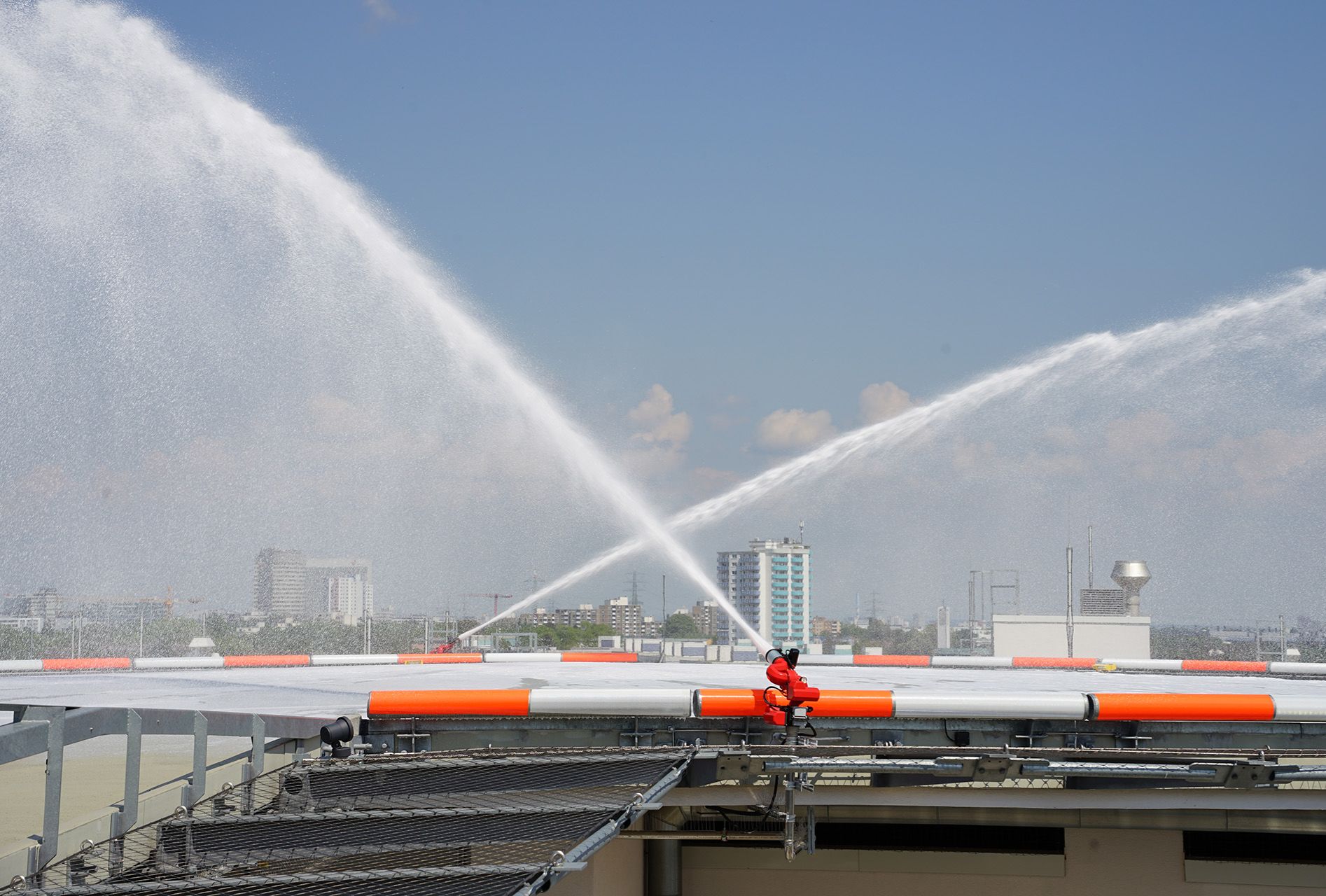
Installation of monitors on a helipad
Fire monitors have been installed on the helipad of a hospital.
View more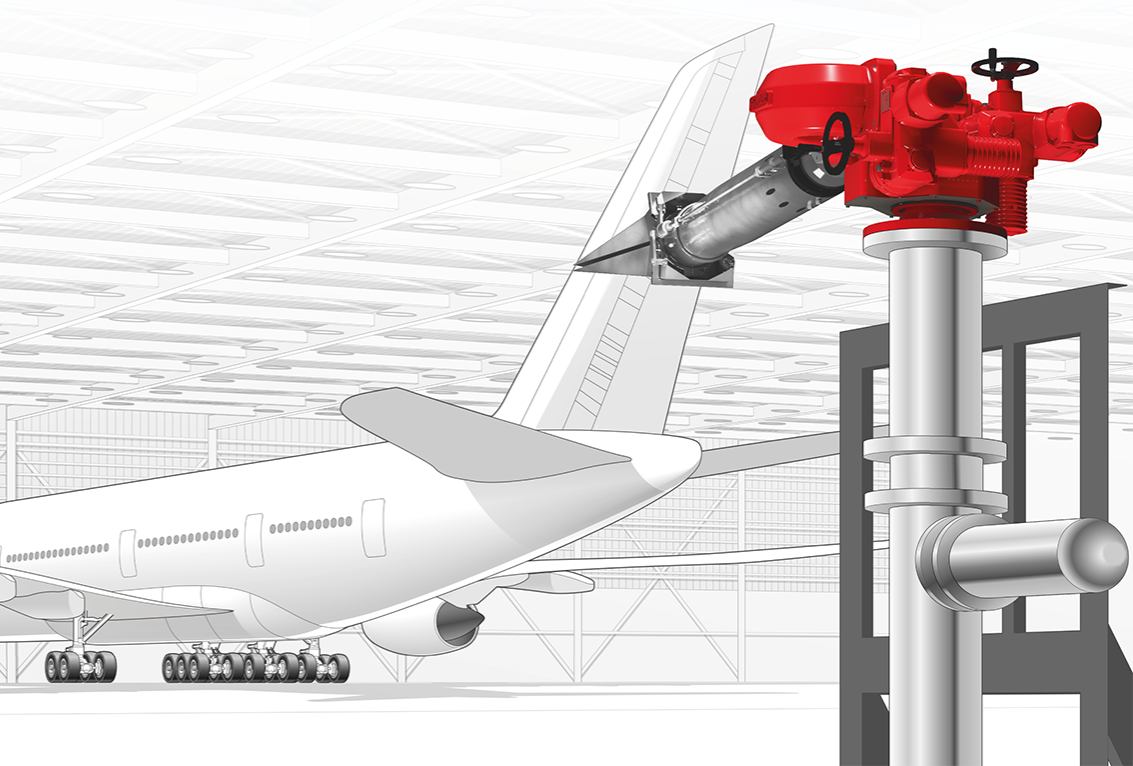
Fire monitors for fixed firefighting systems
Remote-controlled monitors enable precise and flexible deployment.
View more